By HRS Food · Published · Reviewed
Why does some chocolate snap while other chocolate bends or crumbles?
The short answer
A clean chocolate snap depends on its fat crystal structure, recipe, temperature and physical shape. Tempering helps create a firm, glossy chocolate with a crisp break. A warm bar may bend instead. Price alone cannot explain it: an expensive bar can soften, and an inexpensive one can snap well. [1]
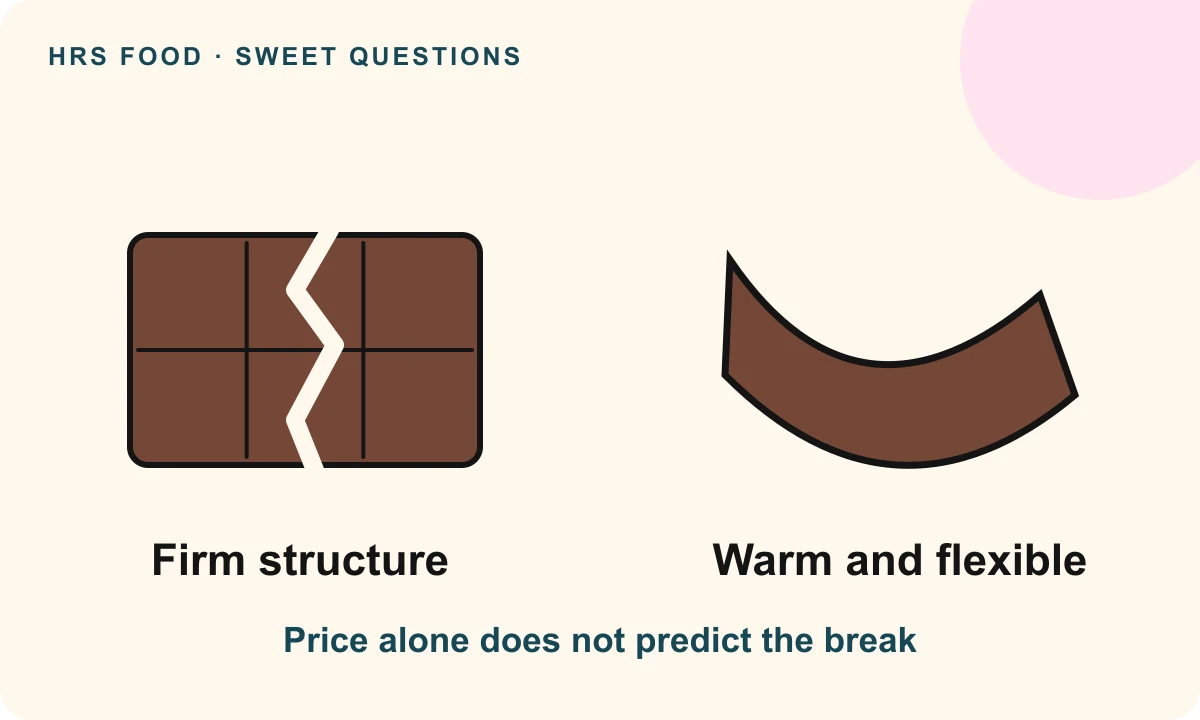
Tempering helps chocolate set into a useful structure
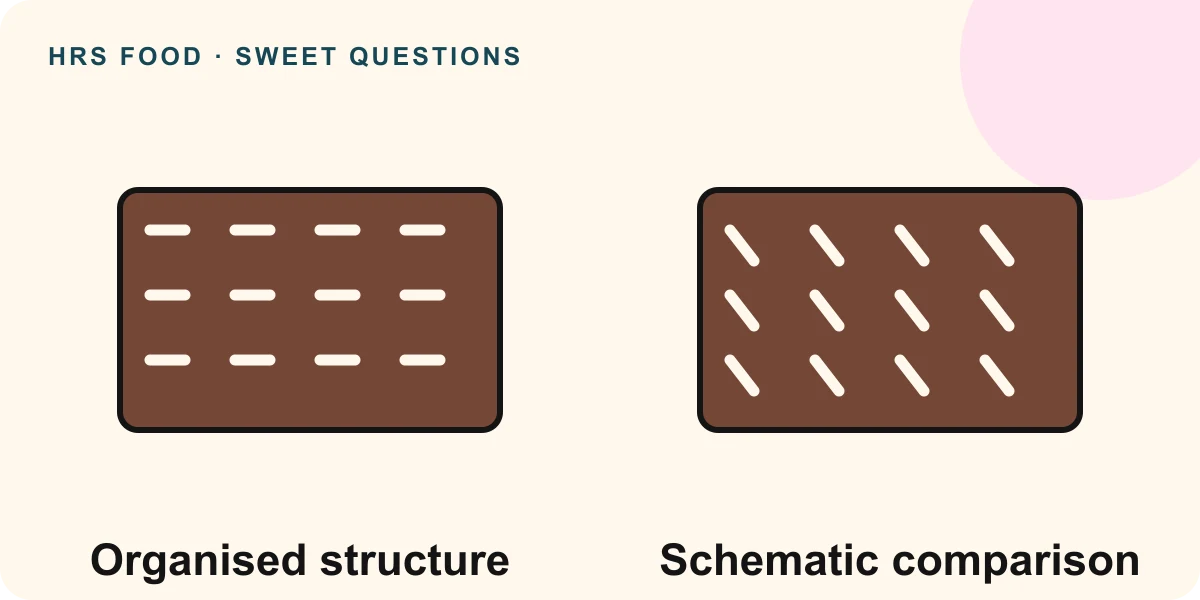
Cocoa butter can crystallise in different forms. Tempering controls crystallisation so chocolate sets with desirable firmness, appearance and bite. Callebaut identifies a good snap as one result of proper pre-crystallisation.
This is why simply melting chocolate and letting it cool does not always restore the structure it had in the packet. Setting and setting well are different outcomes. [1]
The same bar can break differently when warm
Chocolate’s response changes with temperature. Warmth softens its fat structure, so bending or smearing becomes more likely. A cool, firm piece can fracture more sharply.
For a meaningful comparison, put the pieces under the same conditions. Comparing one straight from a warm pocket with another from a cool cupboard tells you about storage as well as chocolate. [2]
Structure
Tempering influences cocoa-butter crystallisation.
Conditions
Temperature changes firmness.
Format
Thickness and recipe affect fracture.
How it works [2]
Thickness, recipe and fillings change the break
A thin shell and a thick solid block cannot be expected to break identically. Callebaut notes that the fluidity of a chocolate affects shell thickness and the snap of the finished product.
Milk ingredients, other fats and inclusions also mean you may be comparing different materials. Biscuit, caramel or aeration introduces structures beyond a plain chocolate bar. [1]
A snap is a clue, not a price test
A good break can indicate well-handled chocolate, but it does not reveal every part of quality or flavour. It cannot tell you bean origin, ethical sourcing or whether you will enjoy the taste.
If a bar crumbles or bends, first consider its recipe, condition and format. Do not jump directly from the sound it makes to a claim that all cheaper chocolate is badly made. [2]
At a glance
| What you notice | What explains it |
|---|---|
| Clean snap | Often associated with firm, well-tempered chocolate. |
| Bending | Warmth or a different formulation may soften the structure. |
| Crumbly break | Recipe, inclusions and condition need checking. |
For the underlying explanation [1]
Common questions
Does every expensive chocolate snap better?
No. Temperature, formulation, thickness and handling matter; price alone cannot establish the result. [2]
Does tempering make chocolate sweeter?
Tempering is about crystallisation and structure, rather than adding sugar to the recipe. [1]
Is a thin chocolate shell a fair comparison with a thick bar?
No. Their different thickness and shape affect how they break. [1]
Sources and how we checked
Written by HRS Food using the sources below. Information checked on . Product examples refer to the named declaration, not every brand or recipe. Use the current pack for ingredients and allergens.
- Callebaut: why tempering matters for snap and shell thickness
- Cocoa quality industry guide: tempering and cocoa-butter crystal forms
- Callebaut: temperature and fat migration
Original HRS explanatory illustrations. Shapes and layouts are simplified to show the idea; they are not product photographs or manufacturing specifications.