By HRS Food · Published · Reviewed
Cadbury chocolate bars: why do they feel so different?
Cadbury chocolate bars feel different because of their structure: Dairy Milk is solid milk chocolate, Wispa contains bubbles, Flake has delicate folds and Crunchie has a honeycomb centre beneath its chocolate coating. Here is how those differences change the bite. [3][2][4]
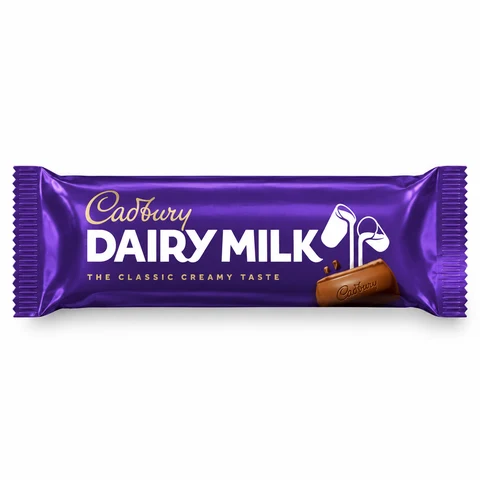 Dairy MilkSolid
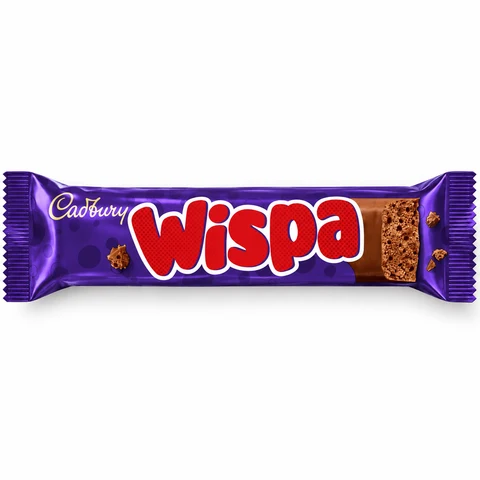 WispaBubbly
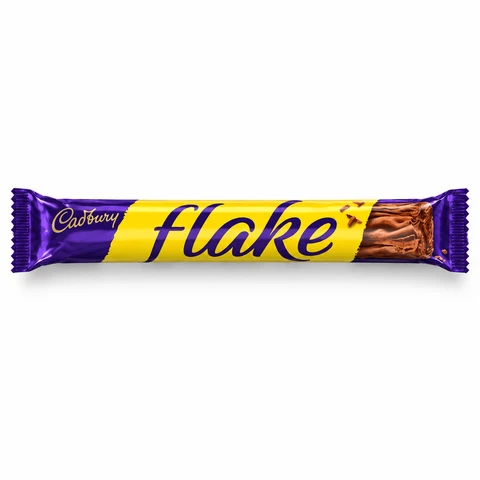 FlakeFlaky
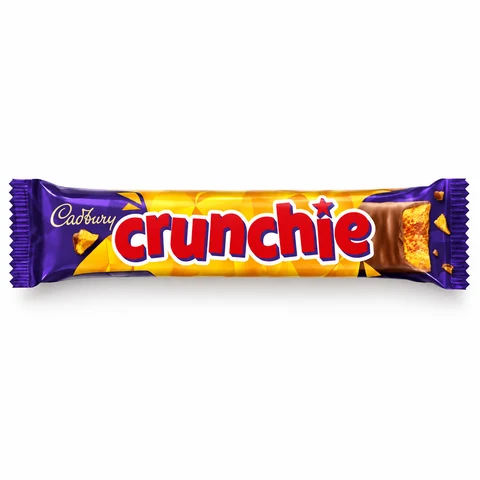 CrunchieCrunchy
What is inside these Cadbury chocolate bars?
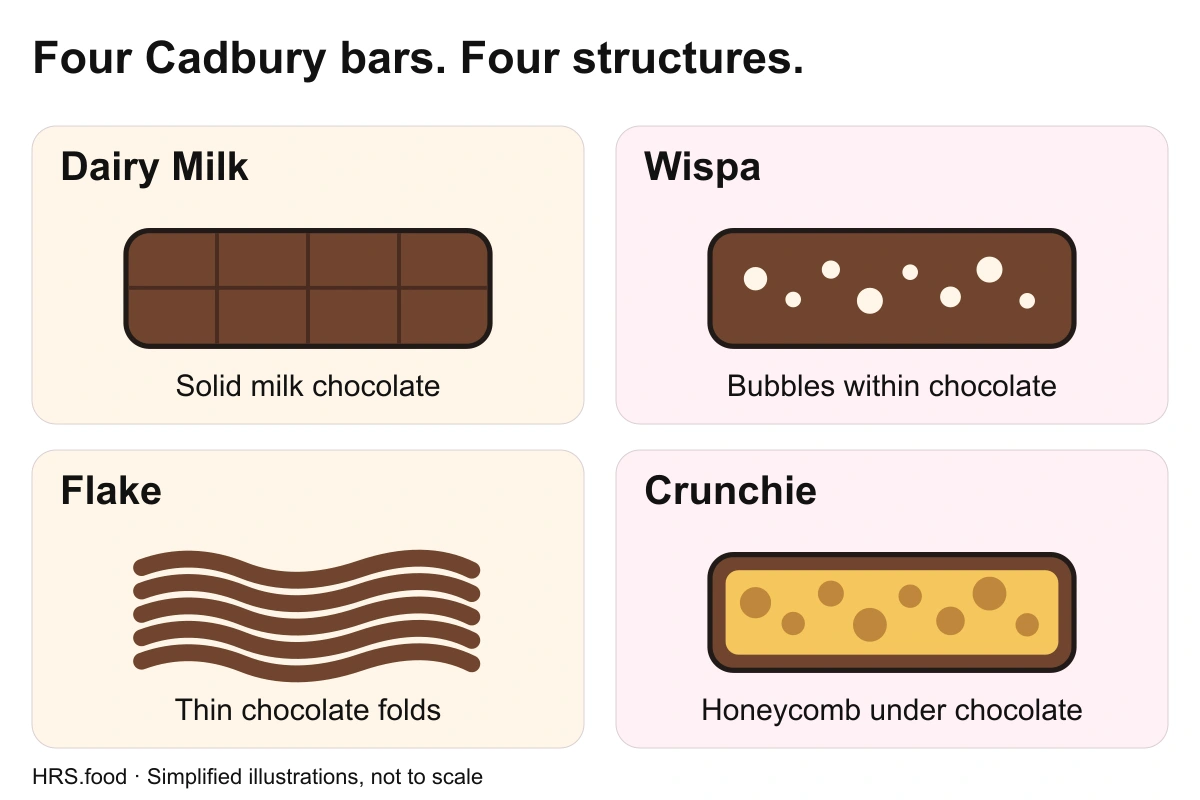
Texture depends on what is inside as well as the chocolate itself. Use this visual comparison to spot the main difference, then tap a bar in the explorer below.
What makes Dairy Milk different from Wispa?
Dairy Milk is a solid milk-chocolate bar; Wispa has a bubbly chocolate centre. Cut or break a piece and compare the edges: one is relatively continuous, while the other contains visible spaces. This is a difference in physical structure, not simply a different flavour. [3]
Why is Wispa bubbly?
Wispa’s bubbles are pockets within its milk chocolate, surrounded by an outer chocolate coating. The spaces interrupt the solid chocolate, giving it a different bite from a solid Dairy Milk bar. The bubbles are part of the chocolate’s structure, rather than a separate crunchy filling. [3]
Why is Cadbury Flake crumbly?
Flake is made up of thin, folded chocolate, which creates its delicate, crumbly structure. Cadbury says the idea came from chocolate falling into folds at the factory in 1920. Those folds give you a different bite from a solid block or a bubbly centre. [2][5]
What is inside a Crunchie?
A Crunchie has a golden honeycomb centre covered in milk chocolate. Its crunch comes from that centre. Although honeycomb and bubbly chocolate both contain spaces, the centres are different materials: Crunchie’s honeycomb sits inside the chocolate coating, while Wispa’s bubbles sit within chocolate. [4][3]
A little chocolate anatomy
Pick a bar. Take a look inside.
A solid chocolate bite
Dairy Milk: solid
A solid milk-chocolate bar is a useful starting point: there is no honeycomb centre or deliberately bubbly middle to change the bite. Source ↗
Explore Dairy Milk at HRS →Box of 48 × 45g barsSimplified illustrations to explain structure. Shapes, bubbles and layers are not to scale.
A short history of Cadbury
John Cadbury opened his Bull Street grocery shop in 1824. Chocolate was part of the business from the beginning, but it was sold for drinking. The move to Bournville and the arrival of Dairy Milk came later. [1][2]
- A Birmingham shop
Cocoa and drinking chocolate join the groceries.
- Bournville begins
The new factory opens outside the crowded city centre.
- Dairy Milk launches
The milk-chocolate bar joins the Cadbury story.
That history is also about place: Bournville developed around George Cadbury’s vision for greener surroundings and better living conditions for workers. [1]
Find these Cadbury bars at HRS
For a simple comparison, look at the broken edge of a small piece before tasting. Can you spot bubbles, folds or a separate centre? Let each piece soften and notice how the texture changes.
Individual bars are pictured; these links open the labelled case formats. Check the product page and current pack for ingredients, allergens and available options.
Two quick questions
When was Cadbury Dairy Milk launched?
Cadbury Dairy Milk launched in 1905. John Cadbury’s Birmingham shop opened much earlier, in 1824, so the company’s origins and Dairy Milk’s launch are two different dates. [2]
Sources, simply stated
Written by HRS Food. History and texture descriptions checked against Cadbury’s information on 26 October 2026. Product links and images were checked against the HRS catalogue. This is an independent educational guide, not a Cadbury-sponsored article.