By HRS Food · Published · Reviewed
Why does dark chocolate taste more bitter than milk chocolate?
The short answer
Dark chocolate usually gives cocoa’s bitter compounds more prominence, while milk chocolate generally balances cocoa with more sweetness and milk ingredients. But cocoa percentage alone cannot predict bitterness: bean choice, processing and the balance of cocoa butter and non-fat cocoa material also change the flavour. [1]
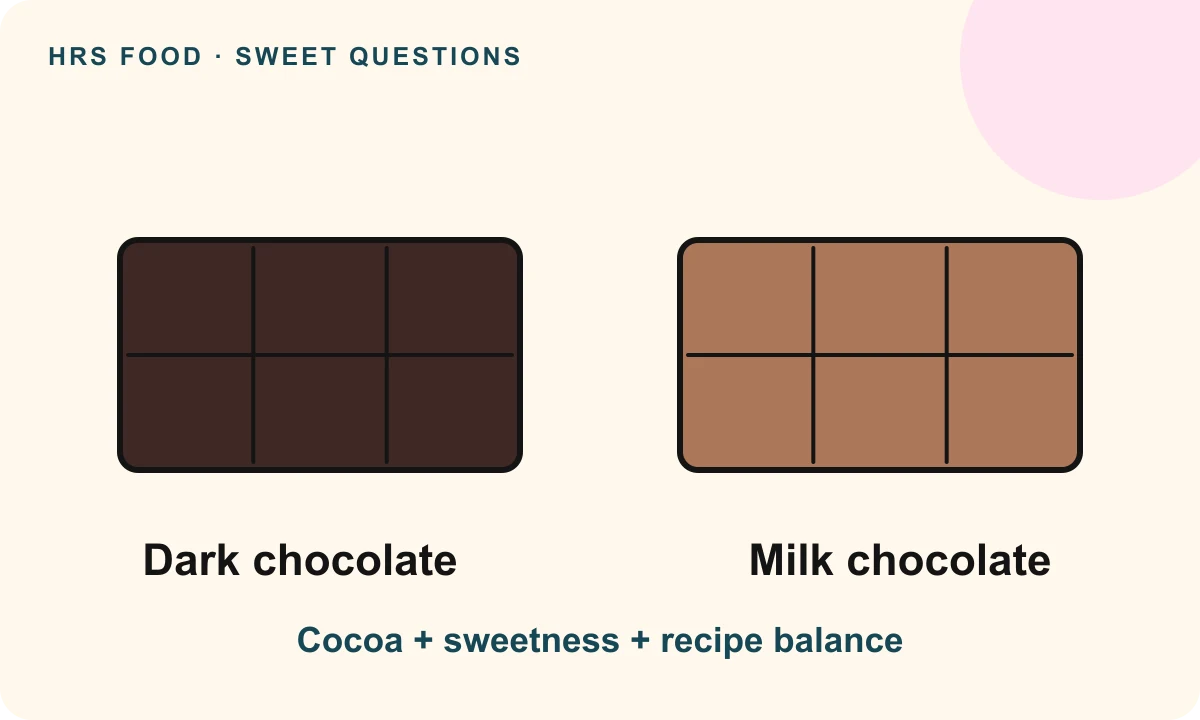
Cocoa brings more than one kind of taste
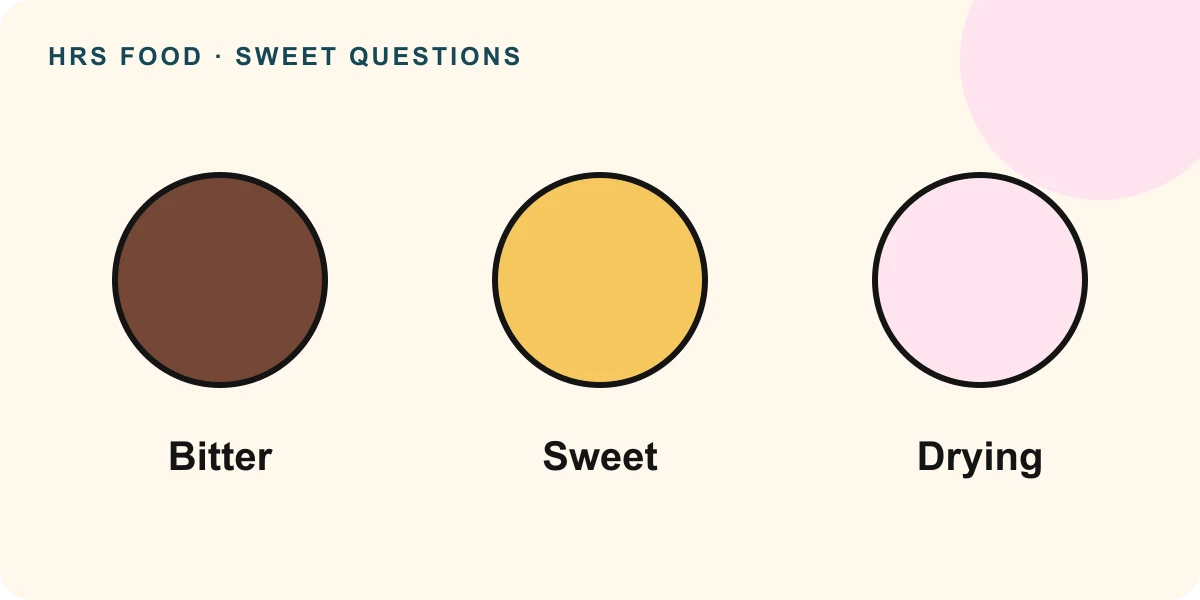
Cocoa contains compounds that contribute bitterness, while other components contribute the drying sensation called astringency. Primary cocoa-tastant research identifies several groups involved in these sensations.
Bitter and dry are not synonyms. A chocolate can taste bitter, feel drying and have a fruity acidity at the same time. Calling all three effects “strong chocolate” hides useful differences. [1]
Why milk chocolate often tastes gentler
Milk chocolate combines cocoa ingredients with milk ingredients and sugar. Their relative amounts change the balance of the bite. A sweeter recipe can make cocoa bitterness less prominent, even though bitter compounds are still present.
A sensory study using semisweet chocolate examined how increasing high-flavanol cocoa affected acceptance. It illustrates that changing the cocoa component changes the experience, rather than sweetness being the only variable. [2]
Cocoa
Adds characteristic bitter and other flavour compounds.
Recipe
Sugar, milk and cocoa ingredients set the balance.
Processing
Bean treatment and chocolate making shape the result.
How it works [1]
What the cocoa percentage cannot tell you
A cocoa percentage combines cocoa-derived ingredients; it is not simply a measure of bitter brown cocoa material. Cocoa butter also contributes to that percentage. Two bars with the same percentage can therefore have different recipes.
Fermentation, roasting and subsequent chocolate processing further change flavour. A percentage is a useful starting clue, not a bitterness thermometer or a guarantee you will prefer the bar. [3]
How to compare two bars fairly
Try similar plain bars at the same comfortable room temperature. Let a small piece soften, then notice sweetness, bitterness, acidity, aroma and drying separately. Fillings, nuts or mint can change the comparison.
Choose the balance you enjoy. Darker colour, a higher number or a higher price is not a requirement for a satisfying chocolate. This taste comparison does not establish a health benefit. [2]
At a glance
| What you notice | What explains it |
|---|---|
| Bitterness | A taste quality contributed by cocoa compounds. |
| Astringency | A drying or puckering mouthfeel. |
| Sweetness | A separate taste that changes the overall balance. |
For the underlying explanation [1]
Common questions
Is every 85% bar more bitter than every 70% bar?
No. Percentage alone cannot capture bean flavour, processing and the balance of cocoa ingredients. [3]
Is the dry feeling the same as bitterness?
No. Astringency describes a drying mouthfeel; bitterness is a taste quality. [1]
Does darker colour mean better chocolate?
Colour and intensity do not establish your preference or a universal quality score. [2]
Sources and how we checked
Written by HRS Food using the sources below. Information checked on . Product examples refer to the named declaration, not every brand or recipe. Use the current pack for ingredients and allergens.
- Primary research: quantifying key bitter and astringent cocoa tastants
- Primary sensory study: high-flavanol cocoa in semisweet chocolate
- Pascha Chocolate: cocoa and cacao percentage terminology
Original HRS explanatory illustrations. Shapes and layouts are simplified to show the idea; they are not product photographs or manufacturing specifications.