By HRS Food · Published · Reviewed
Cacao vs cocoa: what is the difference?
The short answer
Cacao and cocoa both refer to the same plant and its ingredients, but makers use the words in different ways. “Cacao” often appears on nibs and less-processed products, while “cocoa” is common on powders and drinks. The word alone does not guarantee that a product is raw, unroasted or healthier. [1]
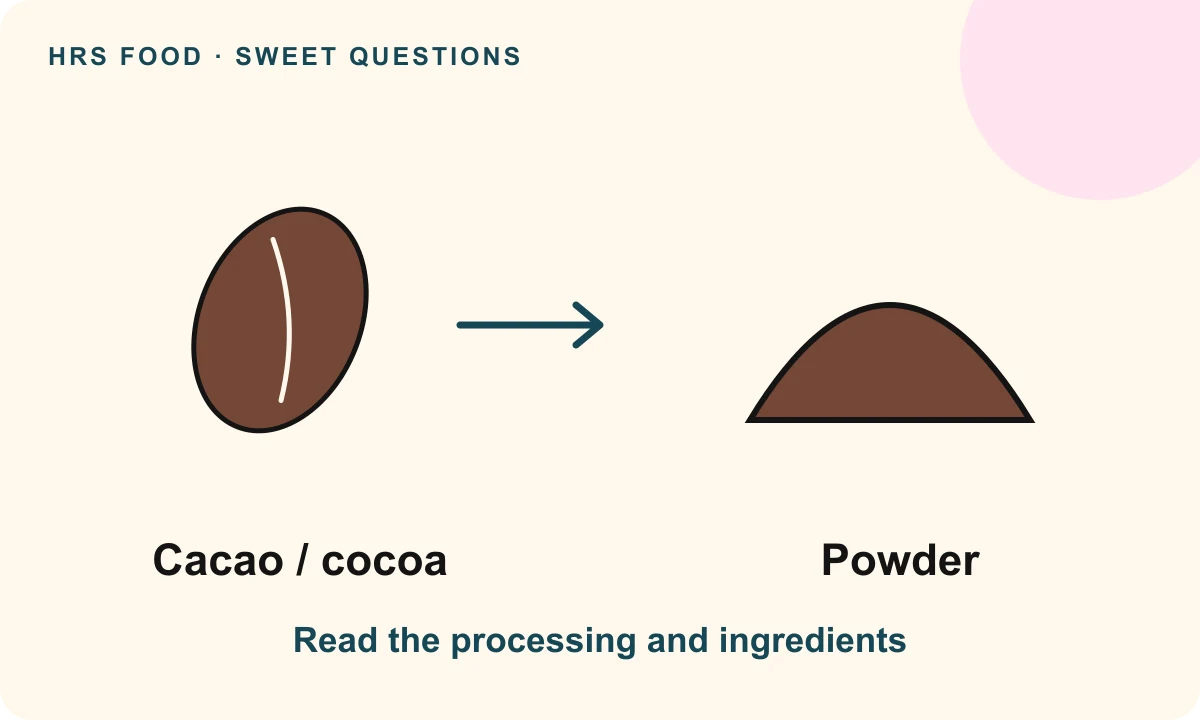
The ingredients begin with the same plant
Theobroma cacao is the botanical name behind chocolate. Beans from its pods are processed into ingredients such as cocoa liquor, cocoa butter and cocoa powder. A change in spelling does not identify a different crop.
Chocolate makers also use both cocoa and cacao when stating a bar’s cocoa-derived percentage. Read what the number includes rather than assuming one word describes a superior bean. [1]
Usage varies between makers
Some brands draw a processing distinction between cacao and cocoa in their product language. Others use the words interchangeably. Treat the description on a specific product as information about that product, rather than a universal dictionary for the whole industry.
If roasting or processing temperature matters to your recipe or preference, look for an explicit statement from the maker. “Cacao” by itself is not enough to establish the treatment. [1][3]
Beans
Theobroma cacao provides the starting material.
Processing
Fermentation, drying and further steps shape ingredients.
Products
Nibs, butter, liquor and powder serve different uses.
How it works [2]
Check whether the powder is natural or alkalised
Alkalisation, also called Dutch processing, is an optional treatment that changes cocoa flavour and colour. The International Cocoa Organization describes it separately from the steps that produce cocoa butter and powder.
This is a more useful baking distinction than simply cacao versus cocoa. Follow the recipe’s specified powder because changing acidity and other properties can change the result. [2]
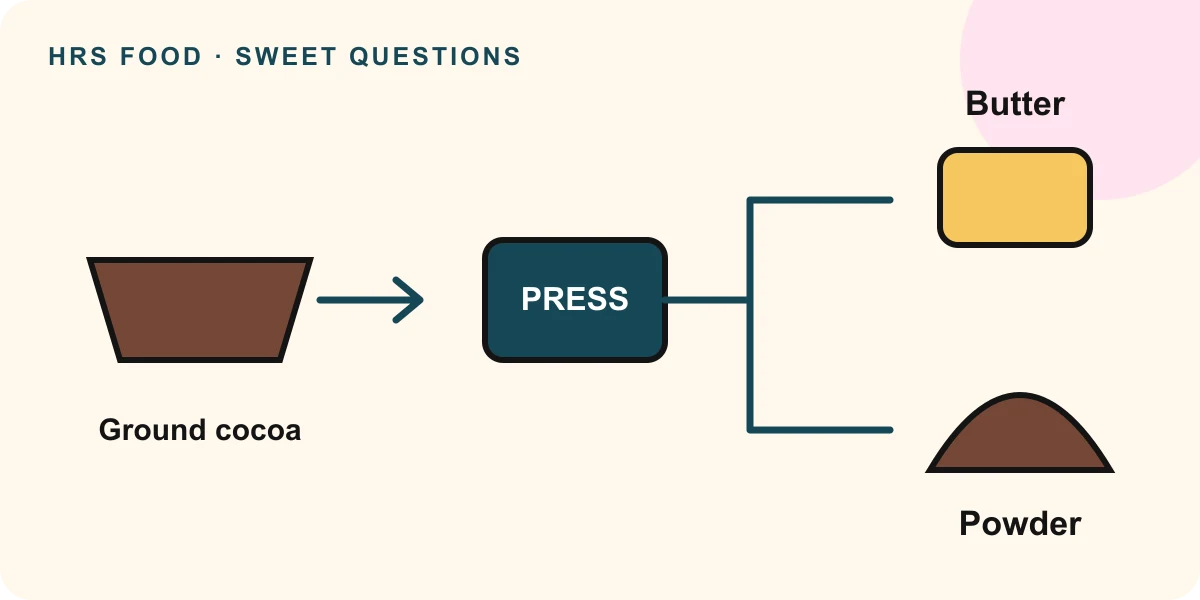
Compare the ingredient list as well as the name
Unsweetened powder and a sweetened drinking-chocolate mix are different ingredients. Check whether the pack contains only cocoa ingredients or includes sugar, milk or other additions.
Choose according to the use: nibs for pieces and crunch, powder where the recipe needs powder, and a drink mix where that is what you want. Neither spelling alone establishes nutritional superiority. [2]
At a glance
| What you notice | What explains it |
|---|---|
| Cacao or cocoa | Terminology alone does not establish every processing step. |
| Natural or alkalised powder | An explicit processing distinction. |
| Unsweetened powder or drink mix | Check for added sugar, milk and other ingredients. |
For the underlying explanation [1]
Common questions
Does cacao always mean raw?
No universal guarantee follows from the word alone. Check the manufacturer’s explicit processing description. [1]
Is cocoa butter dairy butter?
No. It is the fat obtained from cocoa beans, though a finished product can contain dairy separately. [2]
Can every cocoa powder be swapped in baking?
Follow the recipe, particularly where it specifies natural or alkalised powder. [2]
Sources and how we checked
Written by HRS Food using the sources below. Information checked on . Product examples refer to the named declaration, not every brand or recipe. Use the current pack for ingredients and allergens.
- Pascha Chocolate: cacao and cocoa terminology
- International Cocoa Organization: processing, powder and alkalisation
- Lindt: one manufacturer’s distinction between cacao and cocoa
Original HRS explanatory illustrations. Shapes and layouts are simplified to show the idea; they are not product photographs or manufacturing specifications.