By HRS Food · Reviewed
Is white chocolate actually real chocolate?
The short answer
Yes. White chocolate is a recognised type of chocolate, made with cocoa butter, milk ingredients and sugar. Cocoa butter comes from cocoa beans. What white chocolate leaves out is the dark, non-fat cocoa material that gives milk and dark chocolate their brown colour and stronger cocoa flavour. [1][3]
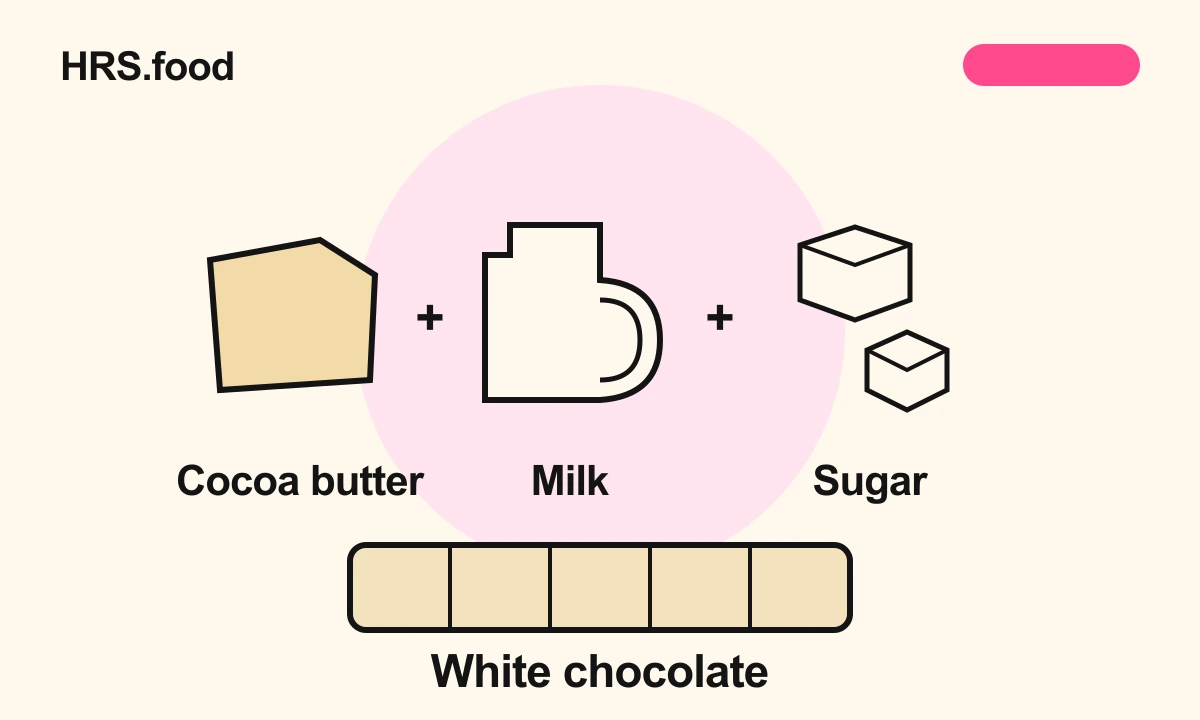
The cocoa ingredient you cannot see
Cocoa beans contain both fat and non-fat material. When cocoa is processed, the fat can be separated out as cocoa butter. Despite its name, cocoa butter is a plant fat; it is not dairy butter.
White chocolate uses a cocoa-bean ingredient even though it does not look like a brown bar. Milk is a separate ingredient in the usual recipe. [2]
Why is it white instead of brown?
The brown cocoa material used in milk and dark chocolate is absent from ordinary white chocolate. Cocoa butter, milk and sugar give it a pale, usually ivory appearance and a sweet, creamy flavour. A perfectly bright white colour is not a test of quality.
The different recipe also explains why swapping white chocolate for dark chocolate can change a dessert. You are changing its cocoa flavour, sweetness and composition, rather than simply changing its colour. [1]
Cocoa beans
Contain fat and non-fat cocoa material.
Cocoa butter
The fat separated from cocoa.
White chocolate
Cocoa butter is combined with milk ingredients and sugar.
How it works [2]
What has to be in white chocolate?
England’s chocolate regulations define white chocolate with at least 20% cocoa butter and at least 14% dry milk solids. At least 3.5% of the finished product must be milk fat; that milk fat is part of the milk-solids requirement, not an extra amount to add on top.
These are minimum composition rules, not a complete recipe. They do not mean the remaining percentage must all be sugar. Read the product name and ingredient list: a white confectionery coating and a product sold as white chocolate are not automatically the same thing. [3]
A useful way to choose a bar
Start with what you want to taste. Choose white chocolate for a milky, sweet cocoa-butter profile; choose milk or dark chocolate if you want more of the brown cocoa flavour. A higher price or darker colour is not a substitute for checking the actual ingredients.
For dietary requirements, remember that cocoa butter being plant-derived does not make a finished white-chocolate bar dairy-free. Check the exact bar, its milk declaration and any other allergen advice, especially for filled bars and products with added nuts or biscuit. [4]
At a glance
| Type | What makes the difference |
|---|---|
| White chocolate | Cocoa butter and milk ingredients, without the usual brown cocoa material. |
| Milk chocolate | Cocoa ingredients plus milk ingredients. |
| Dark chocolate | A recipe built around cocoa ingredients and sugar; check each bar for milk and other allergens. |
For the underlying explanation [2]
Common questions
Does white chocolate contain cocoa?
Yes: cocoa butter comes from cocoa beans. Saying it contains no cocoa at all confuses cocoa butter with the brown, non-fat cocoa material. [2]
Is cocoa butter the same as butter?
No. Cocoa butter is a fat from cocoa beans. Dairy butter comes from milk. Ordinary white chocolate still contains milk ingredients separately. [1]
Is white chocolate vegan?
Ordinary white chocolate contains milk. For a plant-based alternative, rely on the exact product’s vegan declaration and ingredient list rather than the pale colour. [4]
Sources and how we checked
Written by HRS Food using the sources below. Information checked on . Product examples refer to the named declaration, not every brand or recipe. Use the current pack for ingredients and allergens.
- Lindt UK: what white chocolate is and how it is made
- Hotel Chocolat: separating cocoa butter and cocoa material
- England’s Cocoa and Chocolate Products Regulations: Schedule 1
- Hotel Chocolat: milk ingredients and vegan white-chocolate alternatives
Original HRS explanatory illustrations. Shapes and layouts are simplified to show the idea; they are not product photographs or manufacturing specifications.