By HRS Food · Published · Reviewed
Why do sweets get sticky when left out?
The short answer
Many sweets become sticky because they absorb moisture from humid air. Water changes the surface and can soften a hard sugar structure, leaving a tacky film. Warmth and the recipe also matter. An unwrapped boiled sweet and a sealed packet face very different conditions. [1]
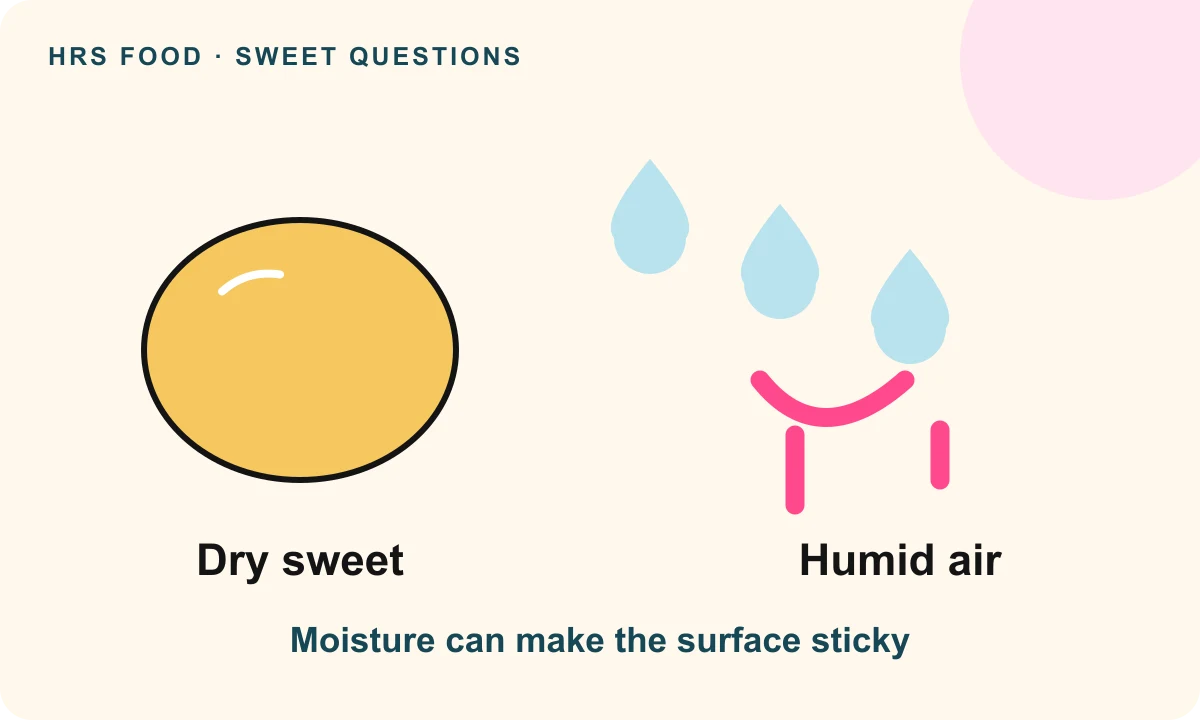
Air can deliver water without a splash
Humidity means there is water vapour in the air. You do not need to spill a drink on a sweet for moisture to reach it. Cooled candy can reabsorb moisture from humid surroundings and become softer than intended.
A bowl left out in a warm, humid room can therefore behave differently from the same sweets kept properly wrapped. [1]
A hard sweet can be a sugar glass
Many hard sweets have an amorphous structure: their molecules are not arranged in the large regular crystals seen in granulated sugar. Scientists often call this a sugar glass.
Water can make the structure more mobile. Research on candy floss examines how temperature and relative humidity change its physical state. A fine sugary structure has a lot of exposed surface for moisture to reach. [2]
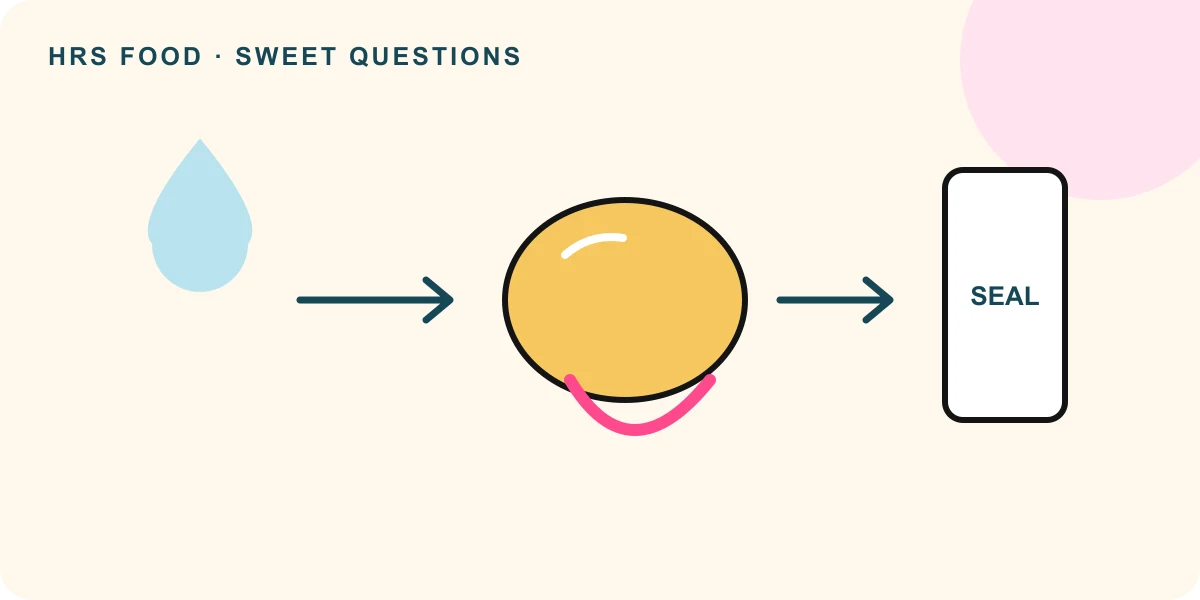
Expose
An unwrapped sweet meets humid air.
Absorb
Moisture reaches the surface.
Soften
The outer layer becomes sticky.
How it works [1]
Why some sweets suffer faster
Formulation, exposed surface and the surrounding conditions all affect the result. A spun-sugar thread, a wrapped boiled sweet and a soft caramel are not interchangeable storage experiments.
Do not assume the strongest colour or sourest flavour predicts stickiness. The physical structure and its exchange of moisture with the surroundings are more useful things to consider. [2]
What helps keep sweets from sticking?
Follow the packet’s storage advice and close it properly after opening. Where suitable, a clean airtight container reduces contact with humid room air. Keep sweets away from heat and avoid wet utensils in a shared container.
Refrigeration is not automatically better: temperature changes can introduce condensation. A sticky surface is a quality observation, not a complete assessment of whether a product is safe. [1]
At a glance
| What you notice | What explains it |
|---|---|
| Humid air | More opportunity for moisture uptake. |
| Fine sugar threads | A large exposed surface can change quickly. |
| A properly closed pack | Less contact with surrounding air. |
For the underlying explanation [2]
Common questions
Does sticky candy always mean melting?
No. Moisture can soften the surface without the entire sweet melting from heat. [1]
Why does candy floss collapse quickly?
Its fine sugar structure is vulnerable to moisture and changes in physical state. [2]
Will every sweet keep equally well?
No. Recipe, structure and conditions differ; follow the maker’s storage and date advice. [1]
Sources and how we checked
Written by HRS Food using the sources below. Information checked on . Product examples refer to the named declaration, not every brand or recipe. Use the current pack for ingredients and allergens.
Original HRS explanatory illustrations. Shapes and layouts are simplified to show the idea; they are not product photographs or manufacturing specifications.