By HRS Food · Published · Reviewed
What is ruby chocolate, and why is it pink?
The short answer
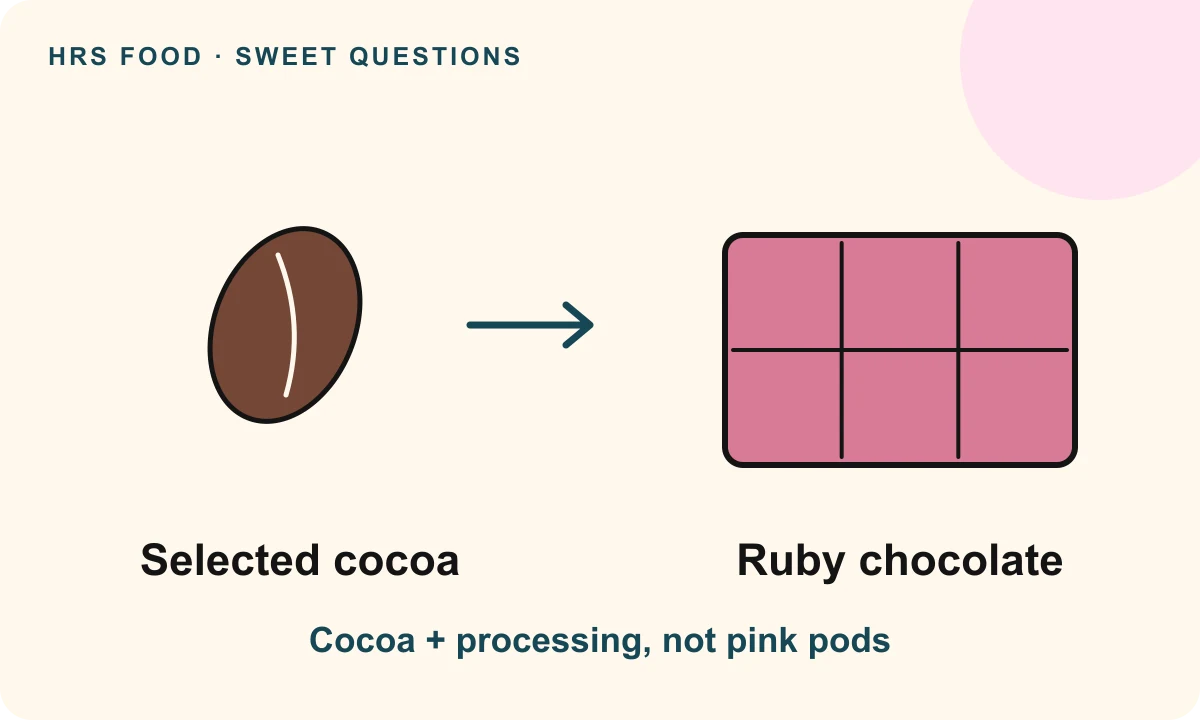
Ruby chocolate is a pink chocolate developed by Barry Callebaut. The maker attributes its colour and fruity taste to selected cocoa beans and a particular process, without added colourants or fruit flavourings in its ruby chocolate. That does not mean it is unprocessed, strawberry-flavoured white chocolate or a new botanical species. [1]
What makes ruby different?
Ruby is presented as a distinct chocolate experience with a pink colour and a fruity, slightly sour profile. Barry Callebaut describes it as a fourth chocolate type alongside dark, milk and white. That is the manufacturer’s description, not a claim that every market has a separate legal ruby category.
The sensory idea matters more than the label: its fruit-like impression need not come from adding berries. [1]
Are ruby cocoa beans naturally pink?
Callebaut describes identifying beans with naturally occurring precursors that can yield the ruby colour and taste through processing. It says neither genus nor origin alone determines whether beans fit this profile.
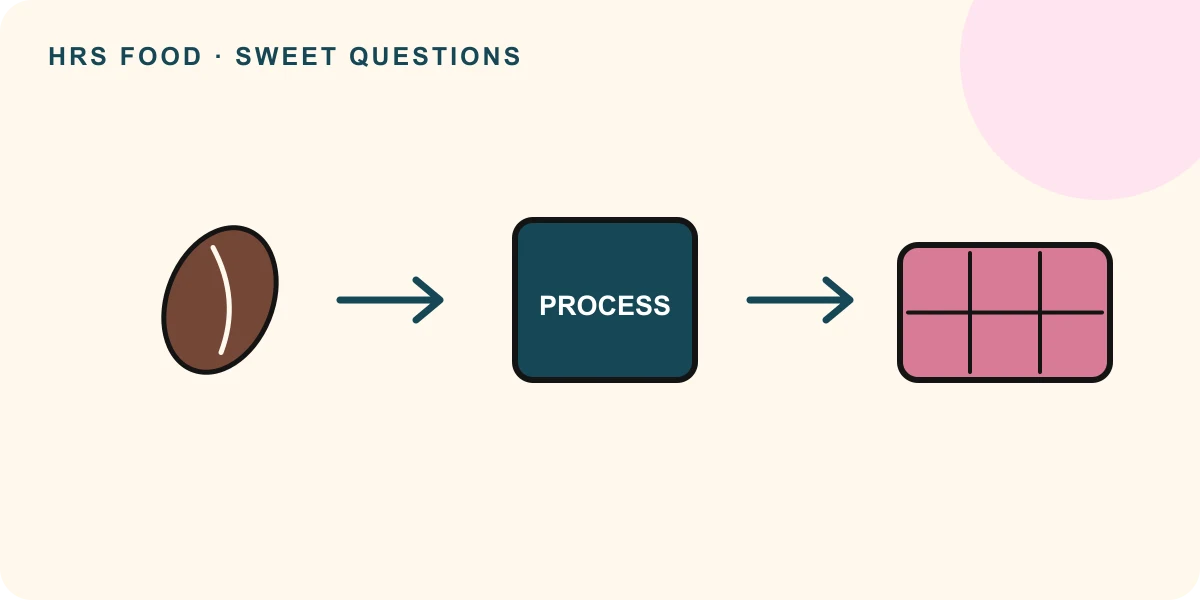
So “ruby bean” should not be pictured as a separate species producing ready-made pink chocolate. Selecting suitable beans and processing them are central parts of the manufacturer’s account. [2]
Select
Identify cocoa beans with suitable precursors.
Process
Use the ruby production process.
Chocolate
Develop the characteristic pink colour and fruity profile.
How it works [2]
What does naturally pink mean here?
The useful distinction is the maker’s claim of no added colourants or fruit flavourings in the ruby chocolate described. This is different from saying no processing, no other ingredients or no additives of any kind.
A finished ruby bar, filled sweet or dessert can include other ingredients. Check the exact product rather than applying the base-chocolate description to every pink confection in a shop. [2]
What should you expect it to taste like?
Expect the maker’s described fruity and sour notes alongside chocolate’s creamy mouthfeel, rather than assuming a strawberry sweet. Added biscuit, fruit or filling can change that balance in a retail product.
If choosing between white and ruby chocolate, compare flavour rather than colour alone. White chocolate has its own cocoa-butter and milk profile; ruby’s appeal includes the distinct fruity-acidic character described by its maker. [1]
At a glance
| What you notice | What explains it |
|---|---|
| Ruby chocolate | A selected-bean and processing approach described by its maker. |
| Pink-coloured white chocolate | Colour alone does not make it ruby. |
| A ruby dessert | Other ingredients may be added to the finished food. |
For the underlying explanation [1]
Common questions
Is ruby chocolate just white chocolate with strawberry flavour?
That is not how the maker describes ruby: it attributes its own colour and fruity profile to cocoa and processing. [1]
Does naturally pink mean unprocessed?
No. Processing is part of the manufacturer’s explanation. [2]
Is every pink bar ruby?
No. Check the product description and ingredients rather than using colour alone. [1]
Sources and how we checked
Written by HRS Food using the sources below. Information checked on . Product examples refer to the named declaration, not every brand or recipe. Use the current pack for ingredients and allergens.
Original HRS explanatory illustrations. Shapes and layouts are simplified to show the idea; they are not product photographs or manufacturing specifications.