By HRS Food · Reviewed
What is the outside of a Flying Saucer sweet made of?
The short answer
The capsule-like outside of a Flying Saucer sweet is a thin, edible starch wafer. It is often called rice paper, but that name does not guarantee rice is an ingredient. For example, the Frisia Flying Saucers declaration checked for this guide lists maize starch. The powder inside is sherbet. [4]
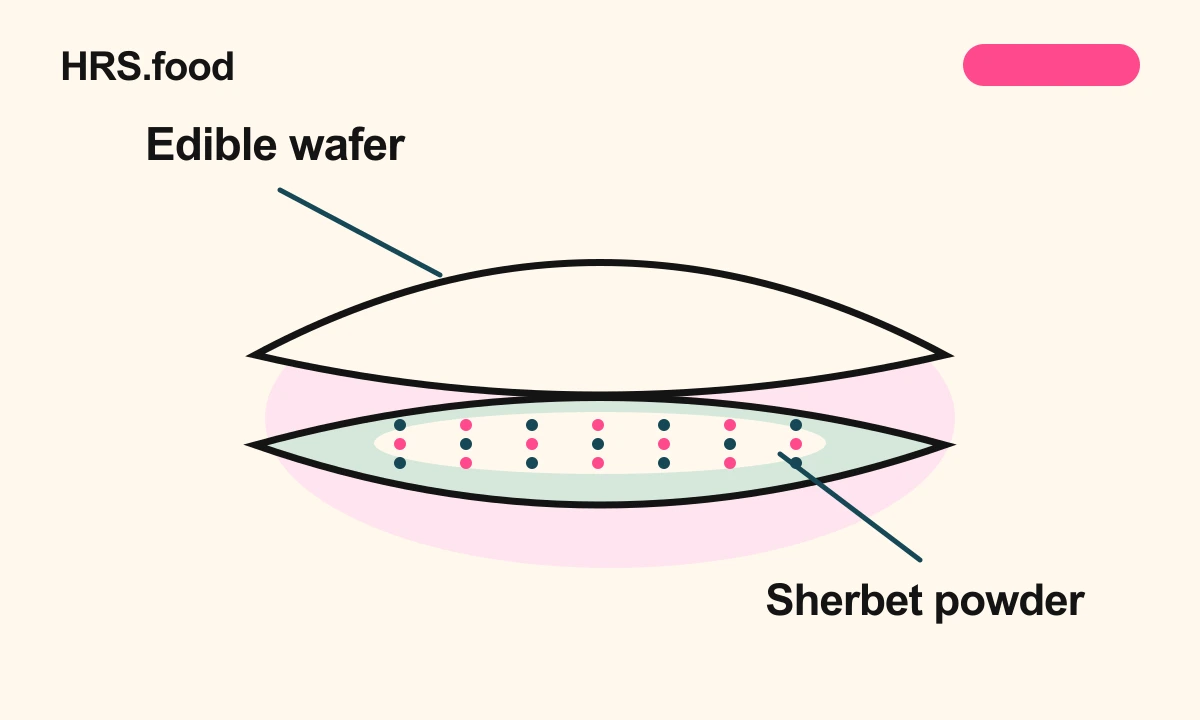
The shell is part of the sweet
That dry, papery disc is meant to be eaten. The Frisia product is described as a sherbet-filled wafer, with maize starch and water among its listed ingredients. The full declaration covers the whole sweet, so it should not be read as an exact recipe for the shell alone.
Maize means corn. A starch wafer is a different food from ordinary writing paper, and its papery texture does not make it a wrapper. The outer bag, tub or cone is still packaging and should be removed. [1]
Why do people call it rice paper?
Rice paper is a familiar sweet-shop description for a very thin edible wafer. The useful distinction is between that everyday name and the ingredients printed on a particular pack. A name remembered from childhood is not proof that the current sweet contains rice.
Recipes also vary between brands. The Candy Realms Flying Saucers listing checked for comparison names maize starch too, but its declaration differs from Frisia’s and includes soya lecithin. Use the exact product when checking allergens or dietary requirements. [2]
Edible wafer
A thin starch-based shell.
Sherbet centre
A sweet, tangy powder inside.
Moisture
Allows the sherbet ingredients to create fizz.
How it works [4]
What makes the centre fizz?
Sherbet can contain a food acid and bicarbonate. Moisture lets them react and release carbon dioxide, producing fizz. The Royal Society of Chemistry distinguishes this from popping candy’s trapped gas.
The shell and the centre therefore have different jobs: the wafer holds the filling, while the sherbet supplies the sweet, tangy powder. A Flying Saucer’s pale shell colour is not a reliable guide to its acid content or a precise flavour recipe. [3][1]
What to check on the pack
Look for the product name, the complete ingredient list and highlighted allergens. If you need a vegan or gluten-free product, check the current declaration for that brand and pack. One manufacturer’s claim should not be extended to every sweet called a Flying Saucer.
If you are serving loose sweets, keep the original food information available. An unlabelled bowl of pastel discs cannot tell someone whether its recipe is suitable for them. Our sherbet guide explains how the same powder also appears in dips and filled chews. [5]
At a glance
| Term | What it means here |
|---|---|
| Wafer shell | The edible outer part of the sweet. |
| Rice paper | An everyday description; check whether rice is actually listed. |
| Sherbet | The confectionery powder inside the wafer. |
For the underlying explanation [4]
Common questions
Can you eat the paper on Flying Saucers?
Yes, the wafer shell is edible. Remove the actual external packaging first. [1]
Are Flying Saucers made from rice?
Not necessarily. The Frisia example checked here lists maize starch. Check your brand’s pack rather than assuming rice from the nickname. [1]
Are all Flying Saucers allergen-free?
No blanket claim is appropriate. Recipes differ: the Candy Realms example checked here lists soya lecithin. Use the exact pack’s allergen information. [2]
Sources and how we checked
Written by HRS Food using the sources below. Information checked on . Product examples refer to the named declaration, not every brand or recipe. Use the current pack for ingredients and allergens.
- Hancocks: Frisia Flying Saucers Cone 45g declaration
- Hancocks: Candy Realms Flying Saucers 36g declaration
- Royal Society of Chemistry: sherbet and popping candy
- Hancocks: Frisia Flying Saucers drum product and wafer description
- Food Standards Agency: checking food allergy and intolerance information
Original HRS explanatory illustrations. Shapes and layouts are simplified to show the idea; they are not product photographs or manufacturing specifications.