By HRS Food · Reviewed
Why is gelatine used in gummy sweets, and what are the alternatives?
The short answer
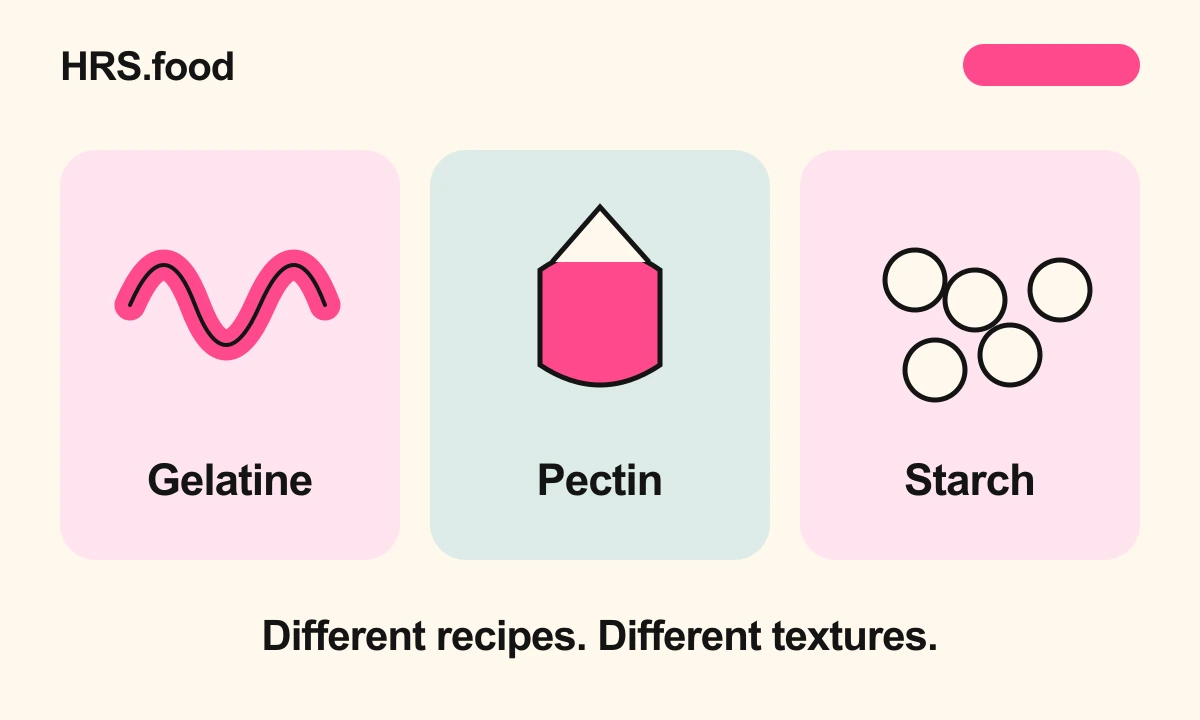
Gelatine gives many gummy sweets their elastic, springy chew by forming a gel that holds water within a network. It is an animal-derived protein. Plant-based alternatives include pectin and starch-based systems, but switching the gelling ingredient can change the bite: a gelatine-free sweet does not have to feel identical to a gelatine gummy. [1][2][3]
Gelatine gives the sweet structure
A gummy needs more than sweetness and flavour: it needs to hold a shape while still yielding when bitten. Gelatine can form a network in the sweet mixture, providing the elastic texture associated with many familiar gummies.
GELITA describes gelatine’s gelling behaviour as thermoreversible: temperature changes can change a gel into a liquid and back again under suitable conditions. The finished sweet’s texture also depends on its whole formulation, including the amount of water and other ingredients. [2]
Where does gelatine come from?
Gelatine is made from collagen, a protein found in animal connective tissue. GELITA identifies sources including pig skins, cattle hides and bones, with other species such as fish also possible. It is not a plant ingredient.
Gelatine and gelatin are two spellings of the same ingredient; gelatine is common in British English. The ingredient name alone may not tell you the species. If that matters to your diet or beliefs, look for a specific declaration or ask the manufacturer. [1]
Sweet mixture
Water, sweeteners and other recipe ingredients.
Gelling system
Helps build a structure within the mixture.
Finished bite
Texture depends on the gelling ingredient and full recipe.
How it works [2]
What can replace it in gummy sweets?
Pectin is an important plant-based option. Cargill describes pectin gummies as tending towards a cleaner, shorter bite than the elastic chew associated with gelatine. Pectin systems also depend on the wider recipe, so replacing one powder with another is not automatically a like-for-like swap.
Starch-based systems are another route used in confectionery. A label may name starch or modified starch, while other sweets use a blend of gelling ingredients. The useful buying question is whether you enjoy that specific sweet’s texture and whether the complete recipe meets your requirement. [3][4]
Gelatine-free, vegan and halal are different checks
Removing gelatine does not establish that every other ingredient is vegan. A sweet can still contain milk, honey or an animal-derived coating or colour. The Vegetarian Society highlights ingredients such as shellac and carmine as separate things to watch for in confectionery.
Likewise, beef gelatine is not by itself proof of halal suitability. Animal source and the product’s relevant certification or manufacturer declaration need checking. Use the exact product and current pack rather than inferring suitability from a gummy’s colour, shape or a general ingredient category. [5]
At a glance
| Ingredient system | What to know |
|---|---|
| Gelatine | Animal-derived; often used for an elastic chew. |
| Pectin | Plant-based gelling ingredient; often gives a shorter bite. |
| Starch-based system | Another texture option; check the full formulation and declaration. |
For the underlying explanation [3]
Common questions
Is gelatin different from gelatine?
No. They are different spellings of the same animal-derived gelling ingredient. [1]
Are pectin sweets automatically vegan?
Pectin is plant-based, but that does not verify the rest of the sweet. Check the complete ingredient list and an explicit product-specific vegan declaration. [5]
Can I swap pectin for gelatine in the same recipe?
Not reliably without reformulation. The two create different textures and need different conditions; follow a recipe designed for the gelling system you are using. [2]
Sources and how we checked
Written by HRS Food using the sources below. Information checked on . Product examples refer to the named declaration, not every brand or recipe. Use the current pack for ingredients and allergens.
- GELITA: what gelatine is and its animal origins
- GELITA: gelling and other gelatine properties
- Cargill: pectin and plant-based gummy texture
- Cargill: gummy ingredients and starch systems
- Vegetarian Society: animal-derived ingredients in sweets
Original HRS explanatory illustrations. Shapes and layouts are simplified to show the idea; they are not product photographs or manufacturing specifications.