By HRS Food · Reviewed
Why do sour sweets make your mouth water?
The short answer
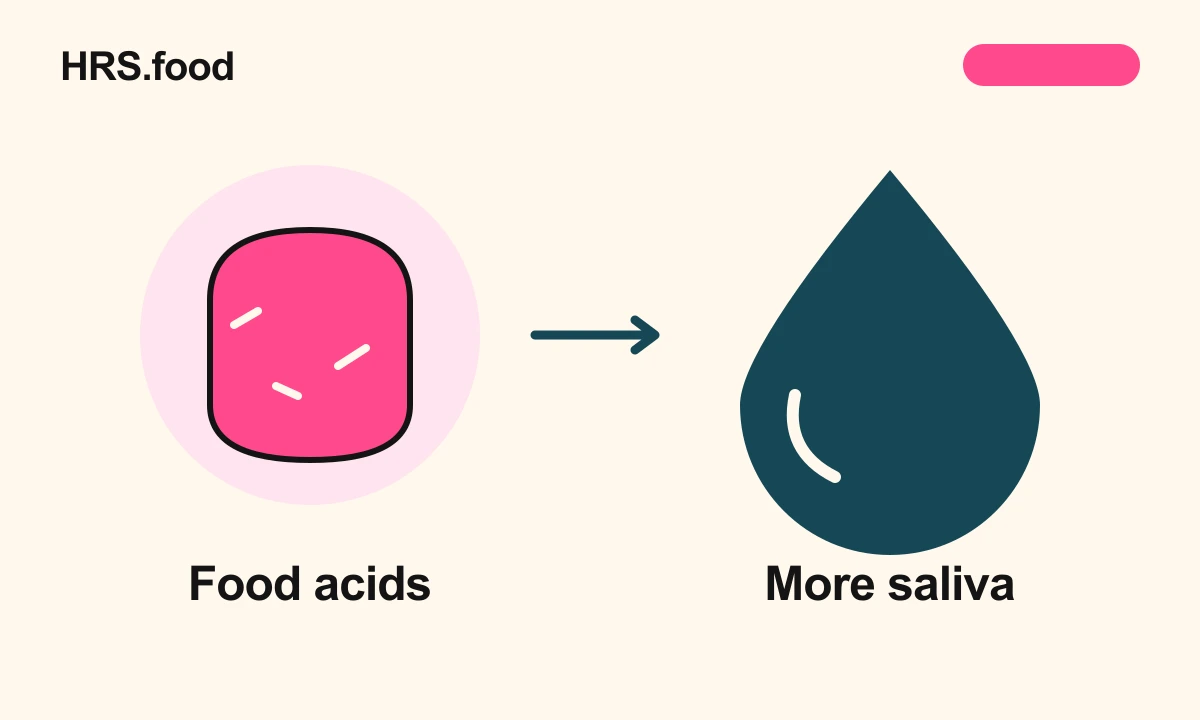
Sour sweets stimulate saliva because their food acids trigger a strong taste response. Your salivary glands release more fluid, which helps dilute, clear and buffer acids in your mouth. That sudden mouth-watering feeling is a normal response to sourness, not proof that a sweet is releasing fizzy gas. [1][5]
The trigger is the acid
A sour sweet’s tang comes from acidic ingredients. Check the label and you may see names such as citric acid or malic acid. For example, HARIBO’s UK Tangfastics declaration lists both. The exact mix depends on the sweet; there is no single sour-candy recipe.
A coating can deliver that taste quickly, but acids can also be part of the sweet itself. A visible sugar dusting does not tell you exactly how acidic a product is, and bright colour does not provide an acidity scale. [3]
Why your mouth responds with more saliva
Taste stimulation changes salivary flow. Research on saliva and taste describes sour stimuli as particularly effective at increasing it. Saliva also contains buffering substances, including bicarbonate, that help reduce acidity.
You do not have to consciously decide to do this. The response is part of the way your mouth handles food. More saliva is useful, but it does not make repeated exposure to very acidic sweets harmless. [1][5]
Food acids
Create a sour taste stimulus.
Taste response
Signals stimulate the salivary glands.
More saliva
Helps dilute, clear and buffer acids.
How it works [1]
Why one person puckers more than another
People differ in salivary flow and sour-taste sensitivity. In research using acid solutions, saliva changed the acidity present in the mouth, with differences linked to flow rate. This helps explain why two people can describe the same sour experience differently.
It also means a name such as extreme or super sour is not a scientific comparison between brands. Without measurements for the products in question, we would not assign them a sourness score or claim that one is the strongest. [2]
Look after your mouth while enjoying sour sweets
Acid can wear away tooth enamel. The Oral Health Foundation advises limiting acidic foods to mealtimes and waiting at least an hour after eating or drinking before brushing. The American Dental Association also recommends water with or after acidic foods rather than brushing immediately afterwards.
If a sweet is making your mouth sore, stop eating it. Persistent pain or sensitivity deserves advice from a dentist. Mouth-watering is a taste response; pain is not a challenge to push through. [4][5]
At a glance
| Sensation | What is happening |
|---|---|
| Sour taste | Food acids stimulate a tart taste response. |
| Mouth-watering | Your salivary glands release more saliva. |
| Pain or sensitivity | Stop and seek dental advice if it persists. |
For the underlying explanation [4]
Common questions
Does a watering mouth mean sour candy is fizzy?
No. A saliva response can happen without fizz. Taste and gas release are different processes; our sour-versus-fizzy guide explains the distinction. [1]
Does saliva protect teeth from all the acid?
Saliva helps buffer and clear acids, but frequent acidic exposures can still contribute to enamel erosion. [1]
Should I brush straight after sour sweets?
Avoid brushing immediately after acidic foods. The Oral Health Foundation advises waiting at least an hour; ask your dental team for advice suited to you. [4]
Sources and how we checked
Written by HRS Food using the sources below. Information checked on . Product examples refer to the named declaration, not every brand or recipe. Use the current pack for ingredients and allergens. This is general information, not a diagnosis or an individual medical assessment.
- Research review: interaction of saliva and taste
- Primary study: saliva, acidity and sour-taste perception
- HARIBO UK: Tangfastics ingredients
- Oral Health Foundation: dental erosion
- American Dental Association: dental erosion and acid exposure
Original HRS explanatory illustrations. Shapes and layouts are simplified to show the idea; they are not product photographs or manufacturing specifications.