By HRS Food · Published · Reviewed
Why do mints make water feel so cold?
The short answer
Mints can make water feel colder because menthol stimulates part of the mouth’s cold-sensing system. A sip then adds a real temperature change to that cooling sensation. The water has not become freezing: your nerves are reporting a stronger feeling of cold. [1]
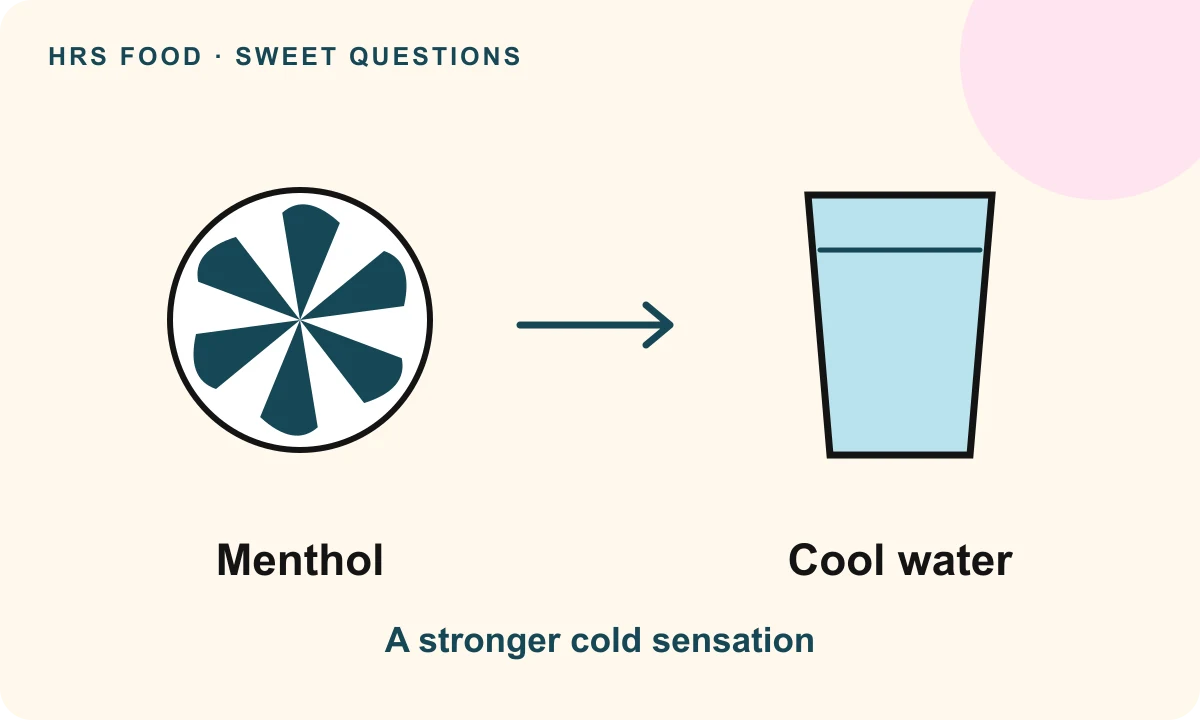
The mint changes the sensation, not the glass of water
Menthol is a cooling compound found in peppermint. It can activate TRPM8, a protein involved in sensing cool temperatures. Think of it as one of the mouth’s cold detectors: menthol can turn up its signal without putting an ice cube anywhere near your drink.
This is a sensation carried by nerves, rather than simply a new flavour on your taste buds. That is why a mint can feel cool even before you take a sip. [2]
Why the next sip feels especially chilly
Water cooler than the inside of your mouth supplies a genuine cooling stimulus. After menthol, that same temperature can feel more intense. Human experiments comparing menthol and water at controlled temperatures found that menthol pretreatment enhanced the perceived cold of cool liquids.
The useful comparison is the same water before and after a mint. A stronger sensation does not establish a lower temperature. [1]
Mint
Menthol stimulates the cold-sensing system.
Sip
Cool water adds a temperature stimulus.
Sensation
The drink feels colder than it did before.
How it works [2]
Why one mint feels stronger than another
A mild mint and a strong peppermint sweet need not create the same experience. Menthol concentration, exposure and the temperature of the drink affect the response. The effect also changes with time, so the first sip and a sip much later may feel different.
It is not useful to promise that every mint lowers the sensation by a fixed number of degrees. The controlled experiments demonstrate a perception effect, not a universal conversion between mint strength and temperature. [1]
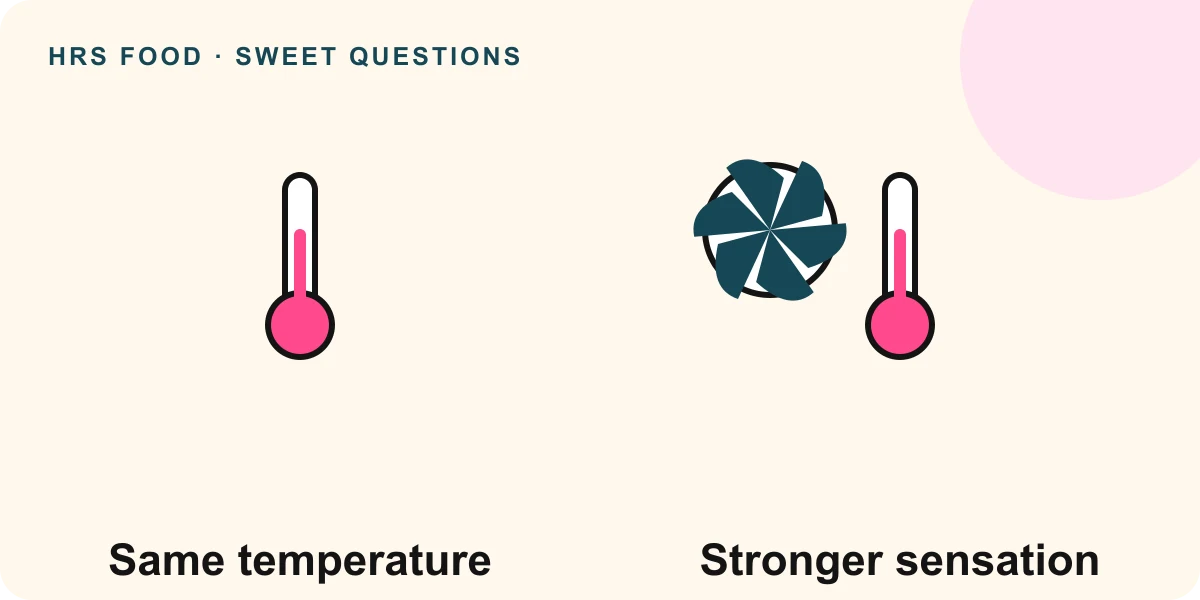
An easy way to picture the effect
Imagine two identical glasses poured from the same jug. You taste the first normally and the second after a mint. The second can feel dramatically colder, even though both started at the same temperature. A thermometer measures the water; your mouth reports the combined sensory experience.
Use ordinary cool drinking water if you are curious about the contrast. There is no need for ice-cold water or an extreme temperature challenge. [2]
At a glance
| What you notice | What explains it |
|---|---|
| Water temperature | A physical property measured with a thermometer. |
| Cooling sensation | A nerve response that menthol can intensify. |
| Mint flavour | The familiar taste and aroma accompany the cooling feeling. |
For the underlying explanation [1]
Common questions
Does mint actually freeze water?
No. The effect described here changes your perception. A mint does not turn a glass of ordinary water into ice. [1]
Is the effect only on taste buds?
No. Cold and menthol also involve sensory nerves and temperature-sensitive channels, including TRPM8. [2]
Will the feeling last all day?
No fixed duration applies to every mint. The response changes with exposure and time, and the drink’s temperature also matters. [1]
Sources and how we checked
Written by HRS Food using the sources below. Information checked on . Product examples refer to the named declaration, not every brand or recipe. Use the current pack for ingredients and allergens.
- Green: human experiments on menthol and oral temperature sensation
- Lemon and colleagues: separation of oral cooling and warming requires TRPM8
Original HRS explanatory illustrations. Shapes and layouts are simplified to show the idea; they are not product photographs or manufacturing specifications.