By HRS Food · Published · Reviewed
Why are some sweets suitable for vegetarians and others not?
The short answer
Some sweets contain animal-derived ingredients such as gelatine, which makes them unsuitable for vegetarians. Others use a different recipe. Vegetarian suitability applies to the whole product, not just its main ingredient. Milk can fit a vegetarian diet but not a vegan one, so the two labels answer different questions. [1]
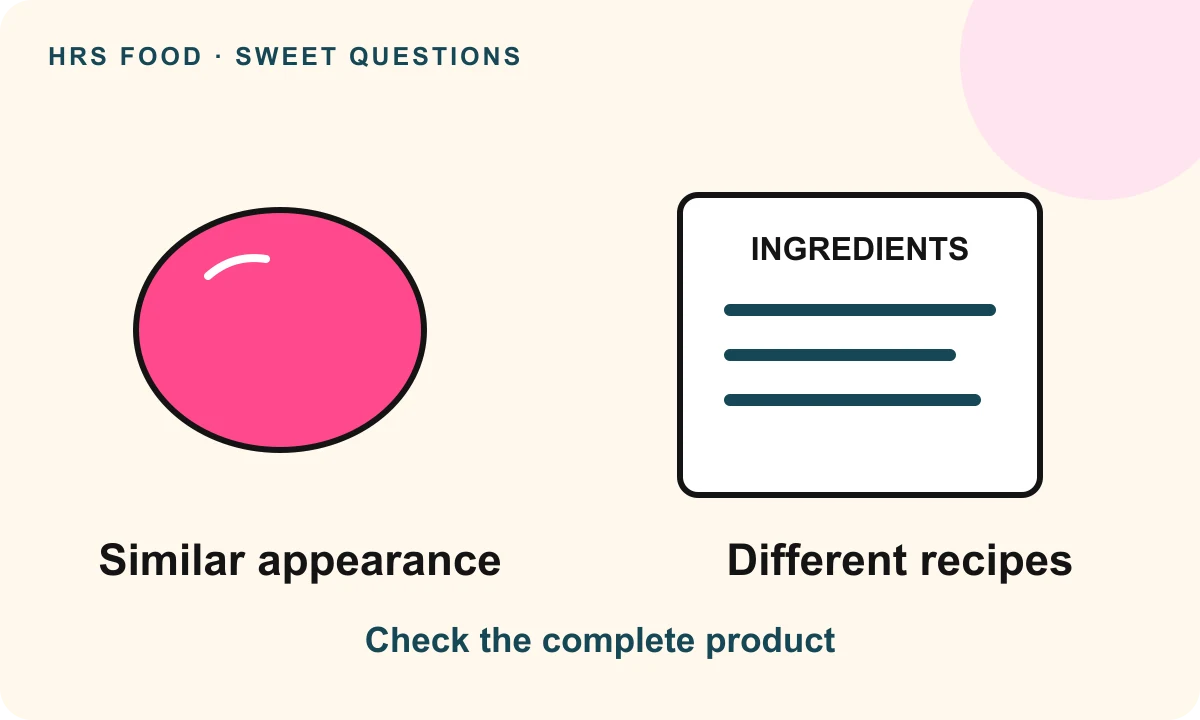
A chewy texture can come from an animal ingredient
Gelatine is made from animal collagen and gives many sweets an elastic chew. A sweet can therefore look like a simple fruit jelly while containing an animal-derived ingredient.
Plant-based setting systems offer other textures. Two sweets with a similar shape can carry different suitability statements because they use different recipes. Their appearance does not identify the setting agent. [1]
Small ingredients can change the answer
Colours and finishes matter too. Carmine, or E120, is derived from cochineal insects. Shellac, or E904, is an insect-associated resin used in some finishes. Beeswax is also relevant when checking vegan suitability.
A red sweet does not automatically contain carmine, and a shiny sweet does not automatically contain shellac. Check the named ingredients rather than guessing from colour. [1]
Statement
Look for the exact suitability wording.
Ingredients
Check setting agents, colours and finishes.
Uncertainty
Ask the maker about unresolved sources.
How it works [1]
Vegetarian and vegan are different standards
Vegetarian products can include dairy or eggs. Vegan products avoid animal-derived ingredients. A milk chocolate sweet therefore needs a different suitability check from a plant-based jelly.
A missing vegetarian logo does not by itself prove that a sweet contains an animal ingredient. If the ingredient source is unclear, ask the manufacturer rather than assuming either answer. [2]
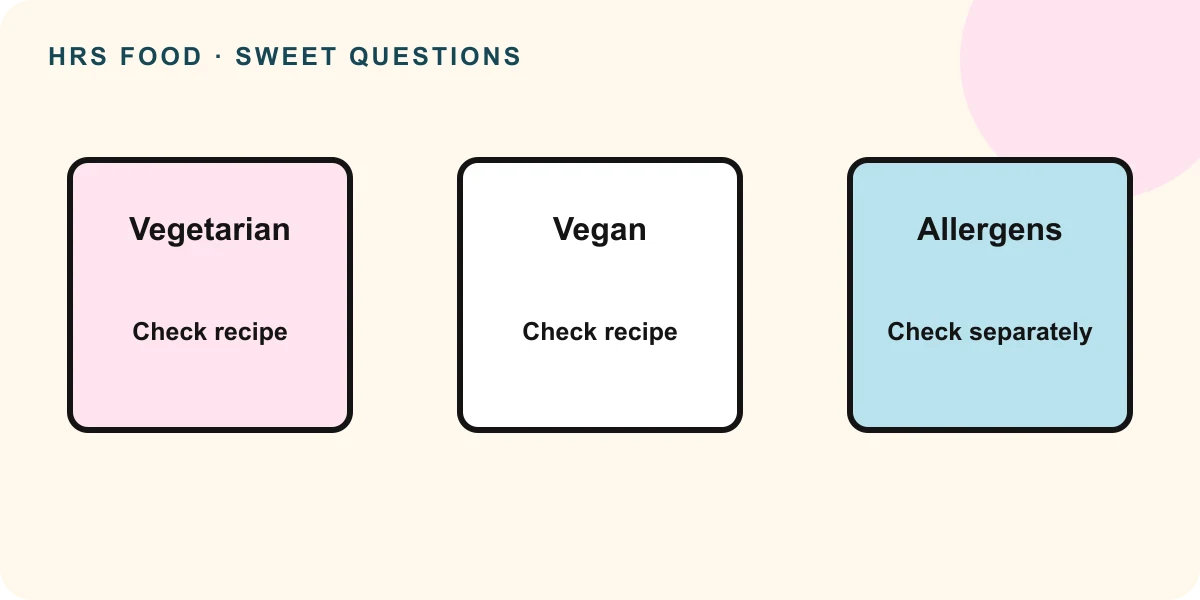
Check suitability and allergies separately
Start with the exact product’s suitability statement and current ingredients. Match flavour and market: recipes within a brand can differ. Do not transfer the statement from a similar-looking packet.
A vegan claim does not mean allergen-free. An accidental cross-contact warning is different from an ingredient deliberately included in a recipe. Vegetarian or vegan wording also does not establish halal certification. [3]
At a glance
| What you notice | What explains it |
|---|---|
| Vegetarian | May include milk or eggs; animal gelatine is unsuitable. |
| Vegan | Avoids animal-derived ingredients. |
| Allergen advice | Still needs checking separately. |
For the underlying explanation [3]
Common questions
Does vegetarian mean vegan?
No. Vegetarian products can contain ingredients such as milk or eggs that are not vegan. [2]
Can a sweet without a logo be vegetarian?
Possibly. The absence of a logo alone does not settle its ingredients or suitability. [1]
Are vegan sweets always safe for a milk allergy?
No. Vegan labelling and allergen controls are different. Check current allergen and cross-contact advice. [3]
Sources and how we checked
Written by HRS Food using the sources below. Information checked on . Product examples refer to the named declaration, not every brand or recipe. Use the current pack for ingredients and allergens.
- Vegetarian Society: confectionery ingredients
- The Vegan Society: definition of veganism
- UK Government: vegan food labelling and allergens
Original HRS explanatory illustrations. Shapes and layouts are simplified to show the idea; they are not product photographs or manufacturing specifications.