By HRS Food · Published · Reviewed
How do sugar-free sweets taste sweet?
The short answer
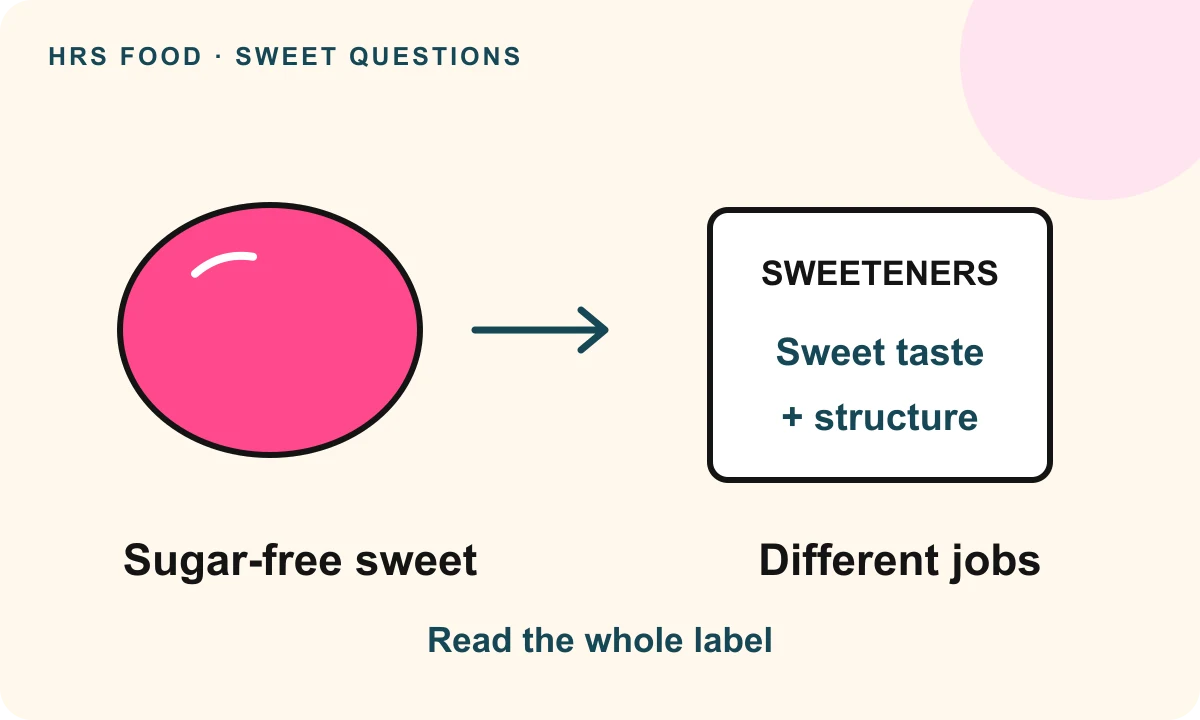
Sugar-free sweets use sweeteners that can create sweetness without ordinary sugar doing that job. Some also replace sugar’s bulk with ingredients such as polyols. “Sugar-free” does not mean calorie-free or literally zero sugar: the applicable claim allows no more than 0.5g sugars per 100g or 100ml. [1]
Sweet taste is not exclusive to sugar
Different substances can produce a sweet sensation. UK-approved examples listed by the NHS include sucralose, steviol glycosides, sorbitol and xylitol. Their amounts and functions vary between products.
An intensely sweet ingredient may be useful in a tiny quantity, but making a sweet also requires a physical structure. Replacing flavour alone does not replace everything sugar contributes. [1]
Sweeteners can do different jobs
Polyols, often called sugar alcohols, include sorbitol and xylitol. They can provide bulk as well as sweetness. They are not the drinking alcohol in a liqueur chocolate.
A recipe can combine different sweeteners to achieve its balance and texture. Read the ingredients to see what a particular packet actually uses rather than assuming all sugar-free sweets have one standard substitute. [1]
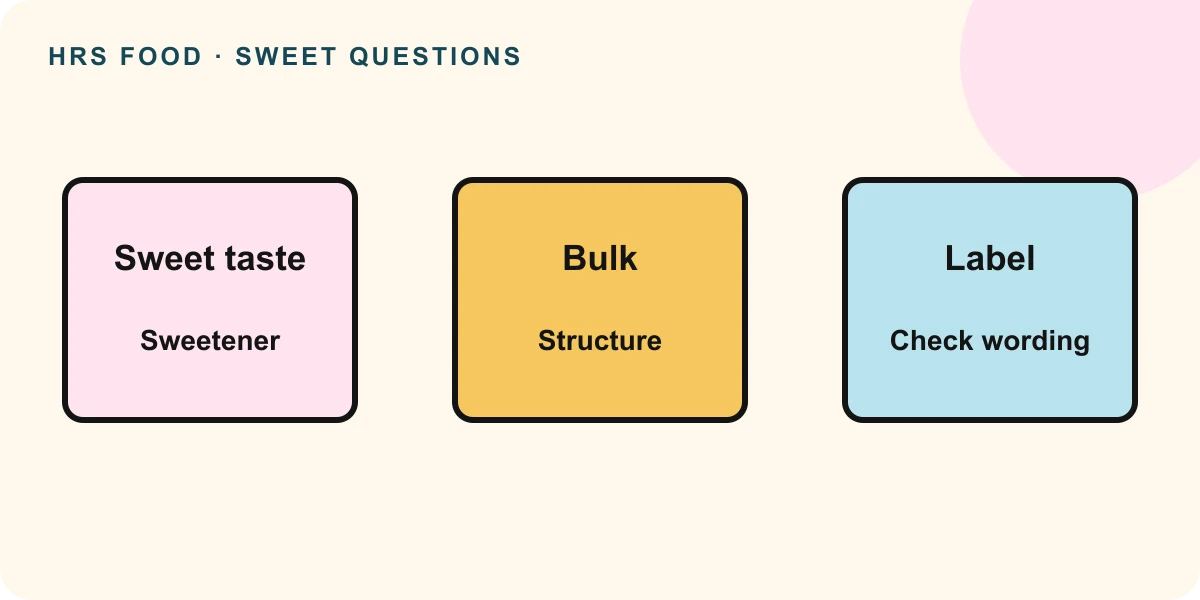
Sweetness
A sweetener supplies a sweet sensation.
Structure
Bulk ingredients help form the sweet.
Label
Claims and warnings explain different aspects of the recipe.
How it works [1]
Sugar-free and no added sugar are different claims
The sugars-free condition permits no more than 0.5g sugars per 100g or 100ml. A no-added-sugars claim instead concerns whether sugars or other ingredients used for their sweetening properties have been added. Naturally occurring sugars may still be present.
The wording answers a specific composition question. It does not on its own establish total carbohydrate, energy content or whether a product suits an individual medical diet. [2]
Why do some packets mention laxative effects?
Government labelling guidance requires a warning where foods contain more than 10% added polyols: excessive consumption may produce laxative effects. This explains why a bag can need portion awareness even when it is sugar-free.
Check the nutrition panel, ingredients and warnings together. For a health condition, use personalised advice rather than treating a front-of-pack sugar claim as a complete dietary recommendation. [3]
At a glance
| What you notice | What explains it |
|---|---|
| Sugar-free | A defined limit on sugars. |
| No added sugar | A different claim about additions; natural sugars can remain. |
| Polyol warning | Relevant to excessive consumption, despite a sugar-free claim. |
For the underlying explanation [2]
Common questions
Does sugar-free mean no calories?
No. The claim concerns sugars, not the total energy of the food. [2]
Are sugar alcohols the same as spirits?
No. Polyols such as sorbitol and xylitol are a different ingredient group from drinking alcohol. [1]
Why can sugar-free sweets upset my stomach?
Some contain polyols; packets over the relevant added-polyol threshold must carry a warning about excessive consumption and laxative effects. [3]
Sources and how we checked
Written by HRS Food using the sources below. Information checked on . Product examples refer to the named declaration, not every brand or recipe. Use the current pack for ingredients and allergens.
- NHS: approved sweeteners and polyols
- Nutrition claims regulation: sugars-free and no added sugars
- GOV.UK: sweetener and polyol labelling requirements
Original HRS explanatory illustrations. Shapes and layouts are simplified to show the idea; they are not product photographs or manufacturing specifications.