By HRS Food · Published · Reviewed
How are the coloured layers inside gobstoppers made?
The short answer
The rings inside a layered gobstopper are built up through repeated coatings. Small centres tumble while thin layers of sugar are added and dried. Changing the colour during that build creates distinct bands. It is closer to growing a sweet layer by layer than painting stripes inside a finished ball. [1]
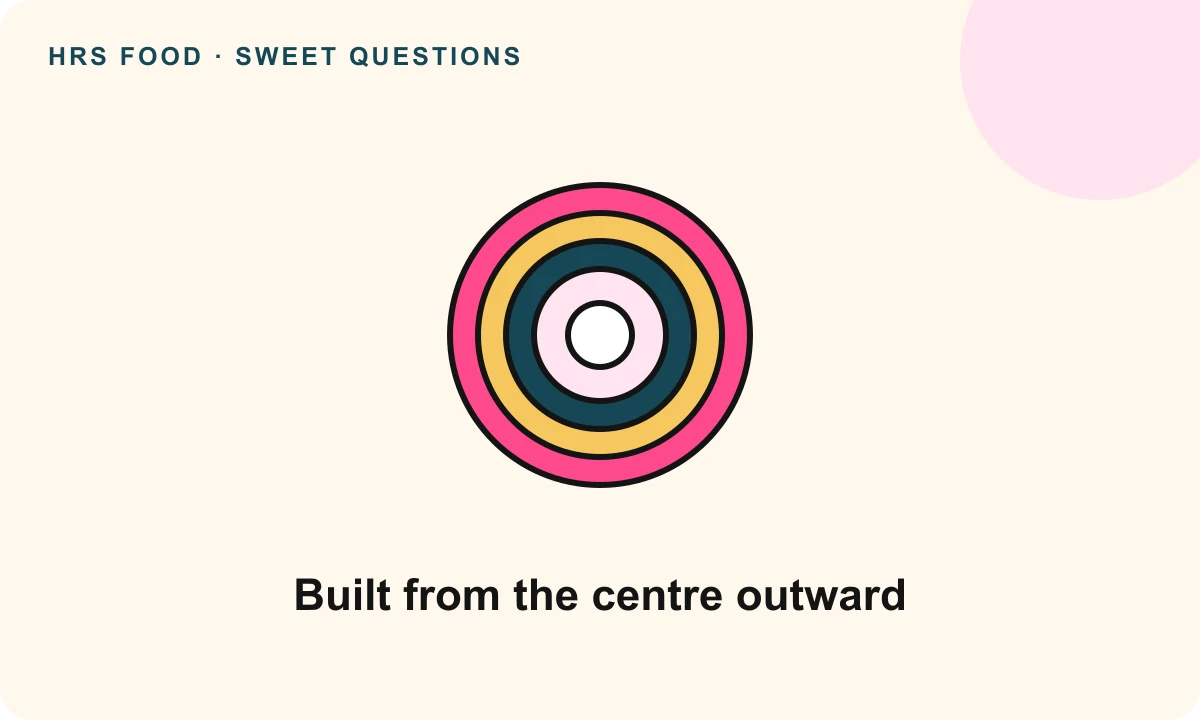
The sweet grows in a moving pan
Sugar panning coats freely tumbling centres in a rotating vessel. Repeated additions distribute syrup over their surfaces rather than leaving one big pool in one place.
The Culinary Institute of America describes hard-sugar panning as the method used for jawbreakers. Chocolate panning and the softer coatings on other sweets are related techniques with different requirements. [1]
Each coat must become part of the shell
A technical paper by a Ferrara Pan specialist describes applying a thin sucrose solution, evaporating moisture and repeating the process. Airflow and the movement of the centres help develop an even coating.
The layers are therefore built through many controlled additions. A diagram with a few bold rings is a simplified way to show the idea, not the actual count of syrup applications. [2]
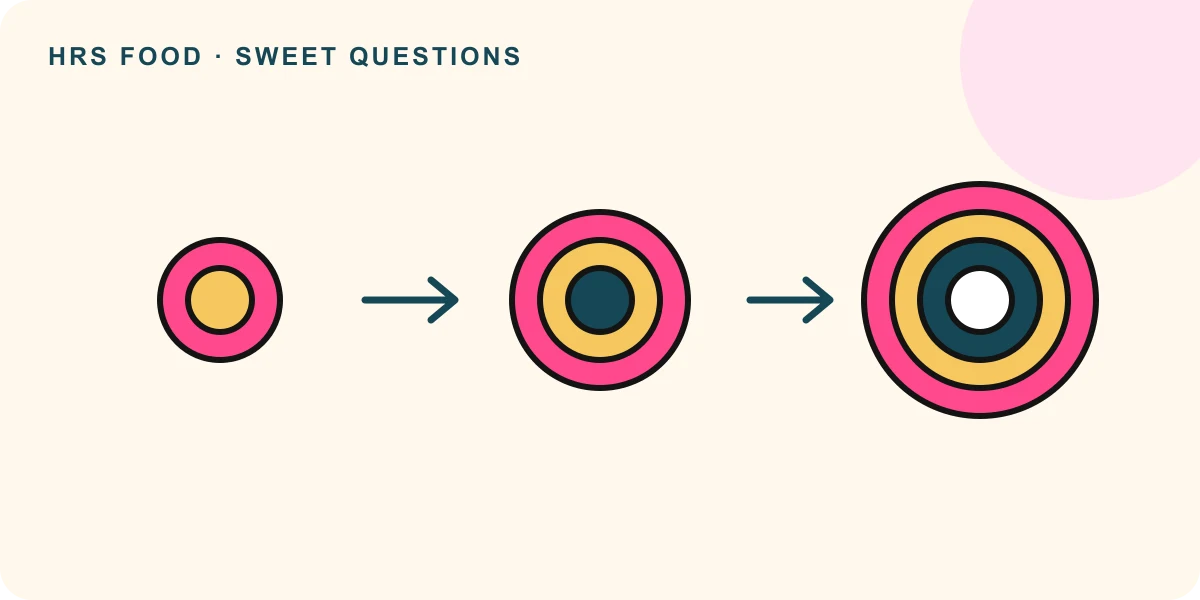
Tumble
Keep small centres moving.
Coat and dry
Build the sugar coating in repeated additions.
Change colour
Later coatings create another band.
How it works [2]
Colour changes produce the bands
If the colour of later coatings changes, a cross-section reveals the earlier and later stages as different rings. The outer surface covers the colours underneath until that outside wears away.
Ferrara’s Jaw Busters description explicitly presents a sweet grown around a sugar centre, layer after layer. Exact flavours, number of bands and centre materials remain product specific. [3]
Gobstoppers and jawbreakers are not one recipe
These names cover a family of hard layered sweets, and Gobstopper is also used as a brand name. Different makers and sizes can have different centres, coatings and flavour changes.
Do not bite a hard jawbreaker to inspect its rings. Ferrara explicitly warns against chewing its Jaw Busters. Use the cutaway illustration to see the structure instead. [3]
At a glance
| What you notice | What explains it |
|---|---|
| Small inner centre | The starting point for a growing coating. |
| Coloured rings | Successive stages of the build. |
| Smooth outside | The final surface hides the earlier layers. |
For the underlying explanation [3]
Common questions
Are the colours injected through a finished ball?
The layered panning principle builds them from the centre outward. [2]
Is every visible ring one application?
Not necessarily. A coloured band can include multiple coating additions. [2]
Should I bite one open to see the layers?
No. Hard jawbreakers can damage teeth; the manufacturer of Jaw Busters explicitly says not to chew them. [3]
Sources and how we checked
Written by HRS Food using the sources below. Information checked on . Product examples refer to the named declaration, not every brand or recipe. Use the current pack for ingredients and allergens.
- Culinary Institute of America and Greweling: panning methods
- Ferrara Pan technical paper: sucrose hard panning
- Ferrara: Jaw Busters layers and warning
Original HRS explanatory illustrations. Shapes and layouts are simplified to show the idea; they are not product photographs or manufacturing specifications.